
Thriving with AI: Empowering Your Team’s Growth

Learn to thrive with AI: Unlock your team’s potential with expert insights & actionable tips in our how-to guide.

Thriving with AI: Empowering Your Team’s Growth

Can a team stay fast and still keep thoughtful judgment? That question matters today as leaders balance speed and care.

You will help your people excel at the human side of intelligence while using modern tools to cut routine work. Generative systems can draft, summarize, and synthesize information so teams can focus on creative problem-solving and empathetic leadership.

Design rules matter. Set intent, clarify roles, and reward verified answers. Position these systems as leverage, not replacement, and make psychological safety a priority so people test ideas out loud.

Make the future tangible by mapping milestones to build knowledge, shorten cycle time, and lift customer value. When human judgment pairs with faster information, the team wins today and into the future.

Key Takeaways

  • Set clear intent: humans lead judgment; tools speed routine tasks.
  • Clarify roles so managers own decisions and outcomes.
  • Balance speed with rigor by rewarding verified answers.
  • Build a culture of safety for experimentation and learning.
  • Track milestones that show gains in quality and cycle time.

Set the Stage: Why “thriving with AI” matters in today’s workplace

In the modern workplace, quick answers can hide shallow thinking. New studies warn of a “Google Effect 2.0”: people may hand off not just facts but thinking itself.

A preliminary MIT study found heavy reliance on chatbots lowered neural engagement and produced work that felt soulless. That creates what researchers call cognitive debt. Social media and instant feeds amplify certainty, even when the underlying information is weak.

“Progress requires comfort with uncertainty, not just instant answers.”

—John Nosta

Your job is practical. Protect core mental habits like deep reading, problem-solving, and reflective learning. Normalize anxiety and offer clear support so people learn responsibly.

  • Validate fast outputs before decisions.
  • Model intellectual humility and curiosity.
  • Treat the tool as precision leverage, not a crutch.
OpportunityRiskLeader Action
Faster information synthesisDull critical thinkingRequire human validation
Higher output speedCognitive debtPreserve deep work routines
Better access to answersAmplified false certaintyModel inquiry and verification

Build the Right Mindset: Learn, Unlearn, and Relearn with Psychological Safety

To lead change, you must build a mindset that learns fast and unlearns faster. Make space for short practice cycles so people can test ideas and update mental models without penalty. Focus on simple routines that preserve quality while freeing time for reflection.

Adopt openness to experience for faster adaptation

Research shows openness experience predicts adaptability and the ability to unlearn. Coach a beginner’s mindset and pair high-openness champions with peers to run small pilots.

Reduce AI-related anxiety with mindful, flexible routines

Short pauses and micro-mindfulness reduce stress and sharpen thinking. Use weekly skill check-ins so conscientious team members can unlearn outdated steps while keeping standards high.

Create team norms that reward questions over quick answers

Publicly thank people who surface uncertainty. Build lightweight peer-review channels and track time to ensure learning gets real space. Codify norms that favor well-formed questions and celebrate humble inquiry.

  • Coach experiments over perfection.
  • Pair high-openness people with peers to share wins.
  • Track time so reflection is protected.

Strengthen Human Advantages: Emotional intelligence, creativity, and the power of story

Human empathy and narrative craft turn routine outputs into meaningful work. Emotional intelligence rests in the limbic system. Daily practice improves regulation and social effectiveness.

Practice short emotions stretching sessions. Role-play difficult 1:1s with an assistant to explore multiple ways to respond. Then choose the reply that matches your values.

A serene, tranquil scene depicting emotional intelligence. In the foreground, a person sits cross-legged, their eyes closed in deep contemplation, their expression one of calm and inner peace. The middle ground features a lush, verdant landscape with soft, diffused lighting, evoking a sense of harmony and balance. In the background, a subtle BlueHAT logo emerges, seamlessly integrated into the scene, symbolizing the brand's commitment to empowering human potential. The overall atmosphere is one of introspection, emotional awareness, and the transformative power of self-discovery.

Practice “emotions stretching” to boost empathetic leadership

Train managers to name feelings in meetings and reflect them back. That builds trust and steadies teams under pressure.

Use storytelling to add authenticity and meaning to AI-assisted content

“People seek real experiences, narrative, and vulnerability.”

—Li Fan
  • Daily: role-play scenarios, then pick an authentic response.
  • Content: layer customer anecdotes and frontline quotes to add real story and value.
  • Creativity: use constrained prompts that request three distinct options and reasons.
  • Test messages on small groups and watch nonverbal cues so the tone makes sense.

Design Hybrid Workflows: Let machines handle tasks, humans drive value

Create clear boundaries so machines do repeatable steps and people add judgment. A clean workflow routes routine work to reliable tools. That frees your team to focus on high-value decisions.

Identify repeatable tasks for automation

Map candidate tasks such as first drafts, meeting notes, research summaries, and early data synthesis. Assign a human owner to review each output. That keeps quality high and speeds routine delivery.

Define human-in-the-loop checkpoints

Require source citations and evidence links for customer-facing or compliance outputs. Install verification steps so people validate facts, logic, and ethics before approval.

Raise the floor fairly and protect top performers

GenAI-like applications often lift lower performers more and can compress elite separation. Counter that by investing in expert prompts, scenario testing, and advanced review standards that let top talent shine.

Shift roles toward oversight and interpretation

Define a clear role for domain experts to own final calls. Use a tiered access model for sensitive applications so decision trees and private data remain internal.

  • Measure: track rework and defect escapes to monitor quality.
  • Governance: publish a RACI that makes accountability explicit.
  • Learn: capture prompts, edge cases, and best examples so knowledge compounds.

Optimize Your Brain: Daily practices to keep knowledge and creativity sharp

Small daily habits sharpen focus and protect your team’s best thinking.
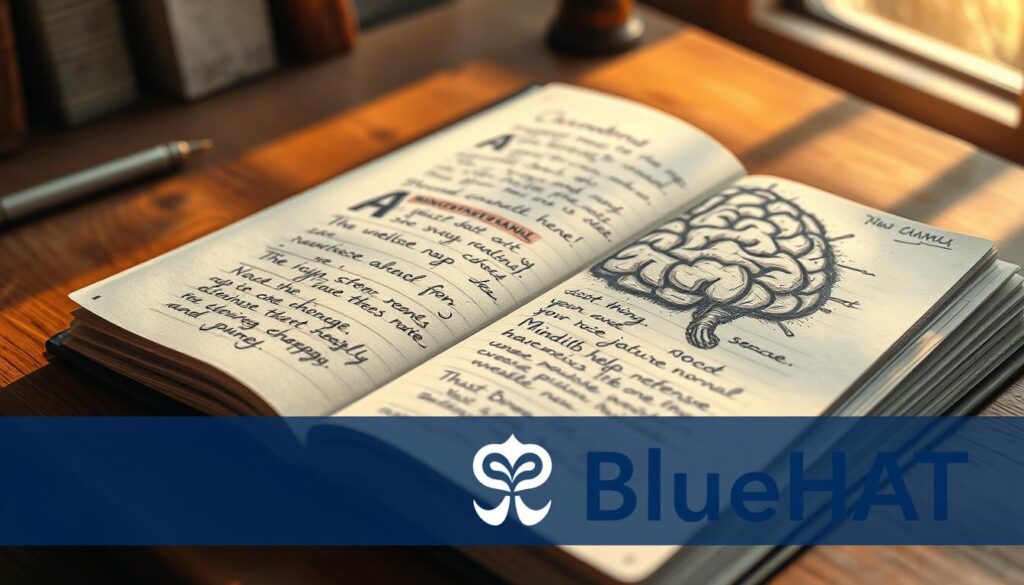
A detailed, photorealistic digital illustration showcasing a mindfulness journal with a brain-like textured cover, resting on a wooden desk. The journal's pages are filled with handwritten notes and sketches, reflecting a deep connection between the mind, creativity, and self-reflection. Soft, warm lighting from a nearby window illuminates the scene, creating a serene and introspective atmosphere. In the foreground, a BlueHAT brand logo is subtly integrated into the design, enhancing the professional and polished aesthetic.

Start a 10-minute Mindfulness Journal. Capture where attention drifted, which tools helped or harmed thinking, and one change for next time. Short entries build metacognition and guard against cognitive offloading.

Mindfulness journal to counter cognitive offloading

Psychology Today highlights reflection as a way to strengthen neuroplasticity. Use the journal to notice how social media or other inputs affect focus.

Train managers to schedule two brief reflection breaks before major decisions. That small pause often saves time and reduces rework.

“A disciplined pause turns noise into useful information.”

  • Enforce device-down blocks to reclaim deep windows.
  • Label anxiety triggers—multitasking, endless notifications, social media—and reduce them.
  • Adopt simple tools: distraction blockers, notification hygiene, and quiet hours.
PracticeBenefitAction
10-minute journalStronger metacognitionDaily entries, 5 prompts
Reflection breaksClearer decisionsSchedule before approvals
Device-down blocksDeep work preservedProtect calendar hours

Remember: disciplined reflection makes intelligence more effective. Protect your brains, manage anxiety, and treat tools as aids that help, not replace, human judgment.

Cultivate Continuous Learning: Curiosity, connection, and better questions

A short, structured hour can turn casual interest into durable knowledge. Make learning predictable so people practice asking sharper questions and build memory that lasts.

A serene study space, illuminated by warm, natural light filtering through large windows. On a wooden desk, an open book and a BlueHAT laptop sit, surrounded by lush indoor plants and a collection of thoughtfully placed objects - a magnifying glass, a globe, and a jar of pens. The atmosphere exudes a sense of calm focus, inviting the viewer to engage in deep, contemplative learning. The room's neutral tones and clean lines create a harmonious, uncluttered environment that stimulates the mind and nurtures the spirit of continuous growth and discovery.

Make a weekly Curiosity Hour practical

Host a Curiosity Hour that starts with a quick overview, then assigns one focused deep dive per person. Blend fast summaries and longer study to strengthen synaptic plasticity and durable knowledge.

Run a Goals Audit that protects time

Once a month, use an external planner to list priorities. Then evaluate offline whether your team’s time matches long-term value. This aligns tasks to meaning and reduces busywork.

Build a Connection Ritual that strengthens trust

Reserve a few minutes in stand-ups for real human check-ins. Small rituals release oxytocin and improve collaboration and resilience—benefits tools cannot copy.

  • Coach leaders to ask one powerful question per meeting.
  • Capture and share learnings in a living repository for years of team memory.
  • Invite short creativity challenges: three what-if ideas per person.

Practical habit: add a quick note that lists tweet share, share tweet, share email, share bluesky, tweet share bluesky, share tweet share to make insights easy to amplify.

Future-Proof Your Team: Roles, skills, and applications that win in the age of AI

Start by naming roles that convert faster tools into durable value. Define a prompt strategist, a model-informed analyst, a human-in-the-loop reviewer, and a decision lead for complex work.

Prioritize skills machines struggle to copy: authentic storytelling, ethical judgment, real-time scenario thinking, and cross-functional influence. These skills raise the team’s ability to shape outcomes, not just produce outputs.

A visionary cityscape with towering skyscrapers, gleaming in the golden hues of a futuristic sunset. In the foreground, a BlueHAT logo hovers, a beacon of innovation amidst the bustling metropolis. Cascading data streams and holographic interfaces dance across the urban landscape, showcasing the seamless integration of AI-powered technologies. The scene evokes a sense of awe and wonder, a glimpse into the transformative potential of roles, skills, and applications that will shape the age of AI.

  • Invest in data literacy so your people frame the right question and turn information into action.
  • Sequence pilot applications across product, finance, and customer success to show concrete business gains.
  • Pair innovation sprints with guardrails for privacy, IP, and compliance and measure speed and error reductions.
RoleCore SkillEarly Application
Prompt StrategistPrompt design & testingFaster content drafts
Model-Informed AnalystData literacy & interpretationAutomated reports, decisions
Human ReviewerEthical judgment & storytellingCustomer messaging approvals
Decision LeadReal-time judgmentComplex approvals

Share role models internally who use machines well. Show how human leadership multiplies tool-driven innovation. Promote short learning paths and peer coaching over 6–12 months. Encourage people to share bluesky share email and share bluesky share examples when they test new ways.

Conclusion

Finish by giving your people a real puzzle each week—one a tool cannot solve alone. Make this a habit. It keeps thinking and storytelling at the center of your work.

Design workflows so machines speed routine tasks while humans add meaning and final judgment. Block calendar time for Curiosity Hour, Goals Audits, and Connection Rituals so learning compounds across years.

Use data to validate answers and turn information into trusted knowledge. Protect brains with short reflection breaks. A strong brain plus strong tools makes better ways of working.

Leadership challenge: ask one bold question each week that machines cannot answer. Let your team wrestle with it today and change the world tomorrow.

FAQ

What does "Thriving with AI: Empowering Your Team’s Growth" mean for my organization?

It means adopting tools and practices that let people focus on high-value work while machines handle repetitive tasks. You build psychological safety, strengthen emotional intelligence, and design hybrid workflows so your team delivers creativity, judgment, and lasting value. This approach aligns roles, skills, and processes for sustainable innovation and better outcomes.

Why does "thriving with AI" matter in today’s workplace?

The pace of change is fast. Teams that learn to use intelligent tools alongside human strengths gain efficiency and insight. That improves time-to-decision, quality of output, and employee growth. It also reduces anxiety about change by making roles clearer and work more meaningful.

How do I build the right mindset for this shift?

Start by encouraging learning, unlearning, and relearning. Create norms that reward curiosity and questions, not just quick answers. Promote openness to experience and small experiments. Pair that with routines that reduce AI-related anxiety, such as mindful check-ins and flexible work patterns.

How can leaders reduce AI-related anxiety among staff?

Lead with transparency and empathy. Explain what tools will do and what they won’t. Offer training, hands-on trials, and safe failure spaces. Use psychological safety practices so people can voice concerns and propose improvements without fear.

Which human advantages should we prioritize?

Focus on emotional intelligence, creativity, storytelling, and judgment. These areas create differentiation because machines are strongest at scale and pattern recognition, while humans excel at meaning, nuance, and complex decision-making.

What is "emotions stretching" and how does it help leaders?

Emotions stretching is a practice of deliberately expanding emotional range through role-play, feedback, and reflective exercises. It builds empathy, improves conflict resolution, and strengthens leadership presence.

How should teams design hybrid workflows with AI?

Map tasks by value and repeatability. Let AI draft, summarize, and synthesize where appropriate. Define human-in-the-loop checkpoints for validation and judgment. Shift roles toward oversight, interpretation, and real-time decision-making to protect quality and fairness.

Which tasks are best for AI to handle first?

Start with repeatable work: drafts, meeting summaries, routine data synthesis, standard reporting, and simple content generation. These free time for humans to focus on strategy, relationship-building, and complex problem-solving.

How do we keep high-performer differentiation while raising the floor?

Use AI to automate baseline tasks, then recognize and reward people who add strategic insight, mentorship, and unique contributions. Create career paths centered on interpretation, product strategy, and cross-functional leadership.

What daily practices help optimize the brain for this era?

Use short mindfulness sessions, focused deep-work blocks, and a brief mindfulness journal to counter cognitive offloading. These habits preserve creativity, attention, and the ability to ask better questions.

What is a Curiosity Hour and why run one weekly?

A Curiosity Hour is a scheduled block where teams explore tools, research, or case studies. Blend AI overviews with deep dives to build shared knowledge and spark new ideas. It boosts learning and cross-pollination.

How do I run a Goals Audit that aligns time, work, and long-term value?

Review objectives, current activities, and outcomes. Identify tasks that consume time but add little value. Reassign or automate those tasks, then measure impact. Repeat quarterly to stay aligned with evolving strategy.

What is a Connection Ritual and how does it strengthen teams?

A Connection Ritual is a short, regular practice—like a weekly check-in or storytelling round—that builds trust and psychological safety. It keeps teams connected across hybrid schedules and supports collaboration.

Which roles and skills will win in the age of intelligent tools?

Skills in judgment, systems thinking, storytelling, emotional intelligence, and strategic oversight will be most valuable. Roles that combine domain expertise with human-centered design and governance of tools will be in demand.

How do we measure the impact of these changes?

Track time saved on routine tasks, quality of decisions, employee engagement, and learning metrics. Use both quantitative data and qualitative stories to show how workflows, creativity, and team resilience improve.

How do we keep creativity and ethics central when using tools and data?

Establish clear guidelines for responsible use, bias checks, and authorship. Encourage storytelling and human review to add context and moral judgment. Train teams on data literacy and ethical decision-making.

Where can leaders learn best practices and case studies?

Use reputable sources: Harvard Business Review, MIT Sloan Management Review, Psychology Today, and industry conferences. Combine reading with internal pilots and peer learning to turn ideas into practice.
Community
The HIVE
Get Your One-page GrowthMap
Discover the exact Steps Business Creators use to Launch new offers fast, adjust and grow their business without Overthinking, Fear of Change or Wasting Cash

© 2026 - All Rights Reserved - BlueHAT by Lagrore LP
5 South Charlotte Street, Edinburgh EH2 4AN - Scotland - UK - ID number: SL034928
Terms & Conditions | Privacy Policy | Legal Mentions | Contact | Help  

Download your Growth Map

GDPR